Measuring Organizational Resilience to Drive Preparedness & Innovation
ICOR’s 2026 monthly webinar series goes beyond theory to show how organizations measure, strengthen, and activate resilience using metrics that truly matter.
Across this 10-part series, participants will explore the 5 dimensions of organizational resilience, unpack the 15 core resilience strategies, and dive deep into 75 critical resilience capabilities that drive preparedness, adaptability, and innovation. Included in the exploration is deep-dive into each of the 6 behaviors that are important in preventing breakdown or failure; or enabling an appropriate and timely response to be taken.
Each session is designed to be practical and actionable, giving participants the opportunity to conduct a real-time snapshot assessment of their organization’s resilience—transforming insights into informed decisions, stronger readiness, and competitive advantage.
Back again year! Due to its popularity, participants have the opportunity to earn their “Measuring Resilience Badge” by attending all 10 sessions of the learning series either live or on-demand.
ICOR Webinars are offered live and are available on-demand on both our website and on the ICOR YouTube Channel.
Each webinar is worth 1 continuing education hour. All webinars are scheduled for 12:00-1:00 PM CST / GMT 06:00 unless otherwise noted. Attendees who attend for a minimum of 35 minutes receive a certificate for 1 Hour / .1 CEU.
Continual Improvement & Innovation
Measuring Organizational Resilience to Drive Preparedness and Innovation
More resilient organizations actively promote continual improvement and innovation at all levels and are committed to ongoing validation, learning, and enhancement of their organizational resilience capabilities. This includes the coordination and alignment of systems, regular evaluation of performance, and an understanding of the community(ies) where the organization delivers its objectives.
Attend this webinar to build clarity of your understanding of the 3 Continual Improvement and Innovation strategies and the capabilities required to ensure that the resilience strategy is effectively implemented. Participate in scoring your organization’s capabilities and behaviors related to Continual Improvement and Innovation.
Best Practices
Measuring Organizational Resilience to Drive Preparedness and Innovation
From Assessment to Action: Insights from Organizational Resilience Capability Assessments conducted against ICOR’s Framework. What organizations do well, where they struggle, and how to move from scores to sustained resilience.
In this webinar, we will focus on the assessment process of the fifth dimension: Continual Improvement & Innovation. You will learn why assessing the maturity levels of organizational resilience matters, how to prepare for the assessment, what to expect from the assessment, and how to turn the assessment outcome into sustainable organizational resilience.
Building an Agile Improvement Process
Measuring Organizational Resilience to Drive Preparedness and Innovation
Measuring an organization’s resilience capabilities that deliver on its strategy requires an agile approach. An agile performance evaluation process strengthens organizational resilience by delivering timely, high-value insights when they are needed most. Through continuous review, interim reporting, and close collaboration with stakeholders, organizations gain the clarity required to anticipate disruption, adapt quickly, and remain prepared for change. By shifting reporting from documentation to actionable intelligence, agile evaluations help organizations sustain readiness and build confidence in their resilience capabilities.
Attend this webinar to learn more about how to transform your performance evaluation process using an agile approach. Participate in scoring your organization’s capabilities and behaviors related to using an agile performance evaluation process.
Are We All on the Same Road to Resilience?
We need to all be following the same map!
April 17, 2024
Online
More resilient organizations know who they are and what they stand for. A shared purpose is the glue that holds the organization together. Purpose helps attract people to join an organization, remain there, and to thrive.
Organizational resilience is enhanced when there is a clearly articulated and understood purpose, vision, and values that provide clarity to decision-making and activities at all levels of the organization.
Attend this session to learn how having a strong identity is an essential aspect to building a more resilient organization and serves as a tool that unites the organization’s people around its purpose. We will help you answer the question of why you should be part of the journey.
Who is Leading? Who are we Following?
Are our leaders trusted and respected, and do they act with integrity?
March 27, 2024
Online
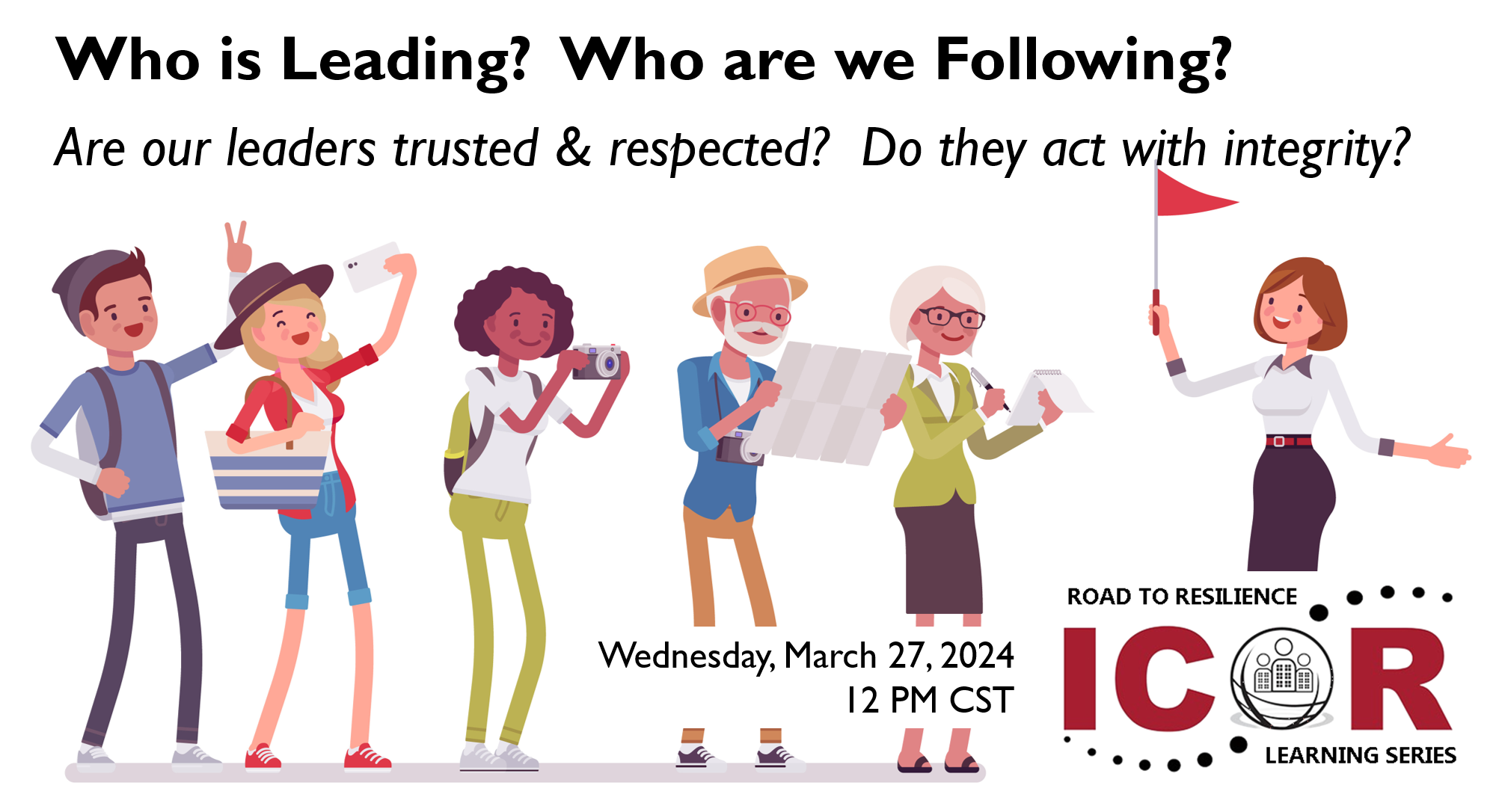
The behavior of an organizationÕs leaders is a key contributor to how it determines and implements its resilience strategies. Building a more resilient organization requires leaders who develop and encourage others to lead under a range of conditions and circumstances, including during periods of uncertainty and disruptions.
Attend this learning session to gain an understanding of the attributes, capabilities, and behaviors required for those leading in increasing an organizationÕs resilience. We will help you answer the question, ÒHow can I be a better leader in resilience?Ó
Train, Plane, or Automobile? How Are We Traveling on the Road to Resilience?
Leadership & governance required to begin the journey
February 28, 2024
Online
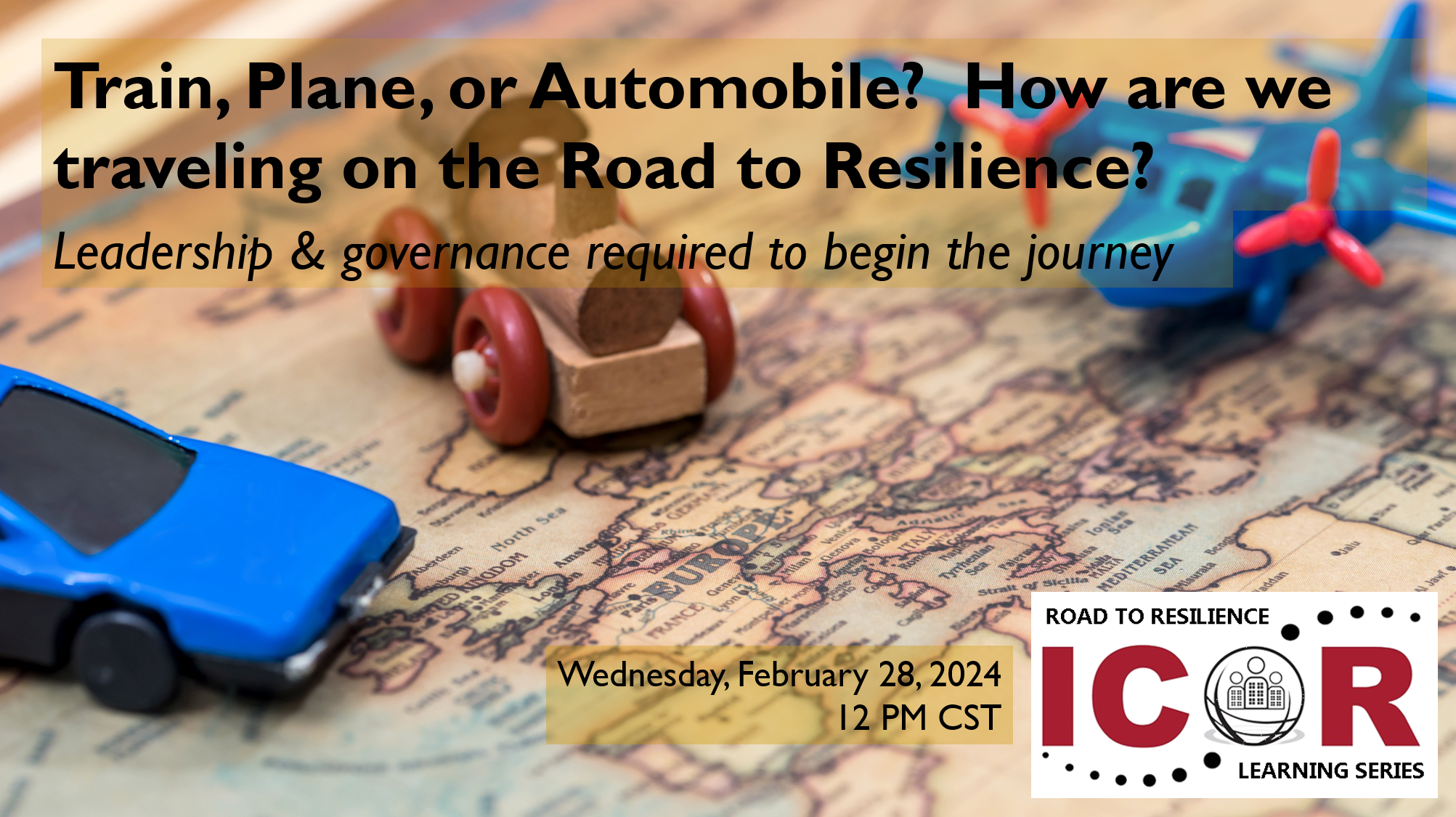
Top management is responsible for the governance and accountability of building the organization’s resilience capability. They should determine the strategy and objectives for organizational resilience and develop measurement criteria to be used to monitor and evaluate the status of the organization resilience attributes, capabilities, and behaviors.
Enhancing resilience should be a strategic organizational goal, and as such, the organization’s leaders must be committed to a sustained focus on organizational resilience.
Attend this learning session to understand what is required by top management to build a more resilient organization. We will help you answer the question, ÒWhat should be the focus of our resilience strategy?Ó
What Do We Need to Travel Down the Road to Resilience?
Introduction to the Road to Resilience Learning Series
January 24, 2024
Online
Organizations face the increasing challenge of managing change at a rate not seen before, while also experiencing crises that occur more often, last longer, are more complex, and have the potential to significantly impact the organizationÕs survival.
Being able to respond both quickly and effectively to change and uncertainty is a capability required of all organizations. We must learn to adapt in the face of diverse challenges Ð to build their resilience in an uncertain world.
Attend this learning session to gain an understanding of ICORÕs resilience frameworks and models as well as to review the results of ICORÕs 2023 Snapshot Assessment of Resilience Strategies, Capabilities, & Behaviors. This session serves as the kick-off for the 2024 series.
Successful Implementation of the Facility Operations Maturity Model (FOMM) for Data Centers
October 25, 2023
Online
Having an operations & maintenance (O&M) program with written procedures and effective people training, determines to a large degree how well a data center lives up to its design intent.
The Facility Operations Maturity Model (FOMM) is a useful method for determining how effective that program is, what might be lacking, and for benchmarking performance to drive continuous improvement throughout the life cycle of the facility.
Attend this webinar and learn from experts from Top Tier Infrastructure in Brazil who will use a case study approach to share the most common findings of this assessment.
ITIL 4 & Risk Management
September 27, 2023
Online
Managing risk is an essential aspect of creating value in an IT service management (ITSM) environment. Implementing and controlling risk in an ITSM environment is not only a good business practice, it can also be a regulatory requirement.
Attend this webinar to learn about managing risk referencing the ITIL 4 Practice Guide (2020).
A Consulting FirmÕs Road to Resilience
August 23, 2023
Online
Yves Dvila shares how this consulting firm has implemented strategies to increase resilience. Yves is the Executive Director and Regional Leader of the business continuity practice at Protiviti Member Firm Peru SAC, a firm specializing in internal auditing, risk and business consulting.
Attend this webinar and learn how to implement strategies to increase resilience using an interactive question and answer approach.
Developing Leaders in Turbulent Times
July 26, 2023
Online
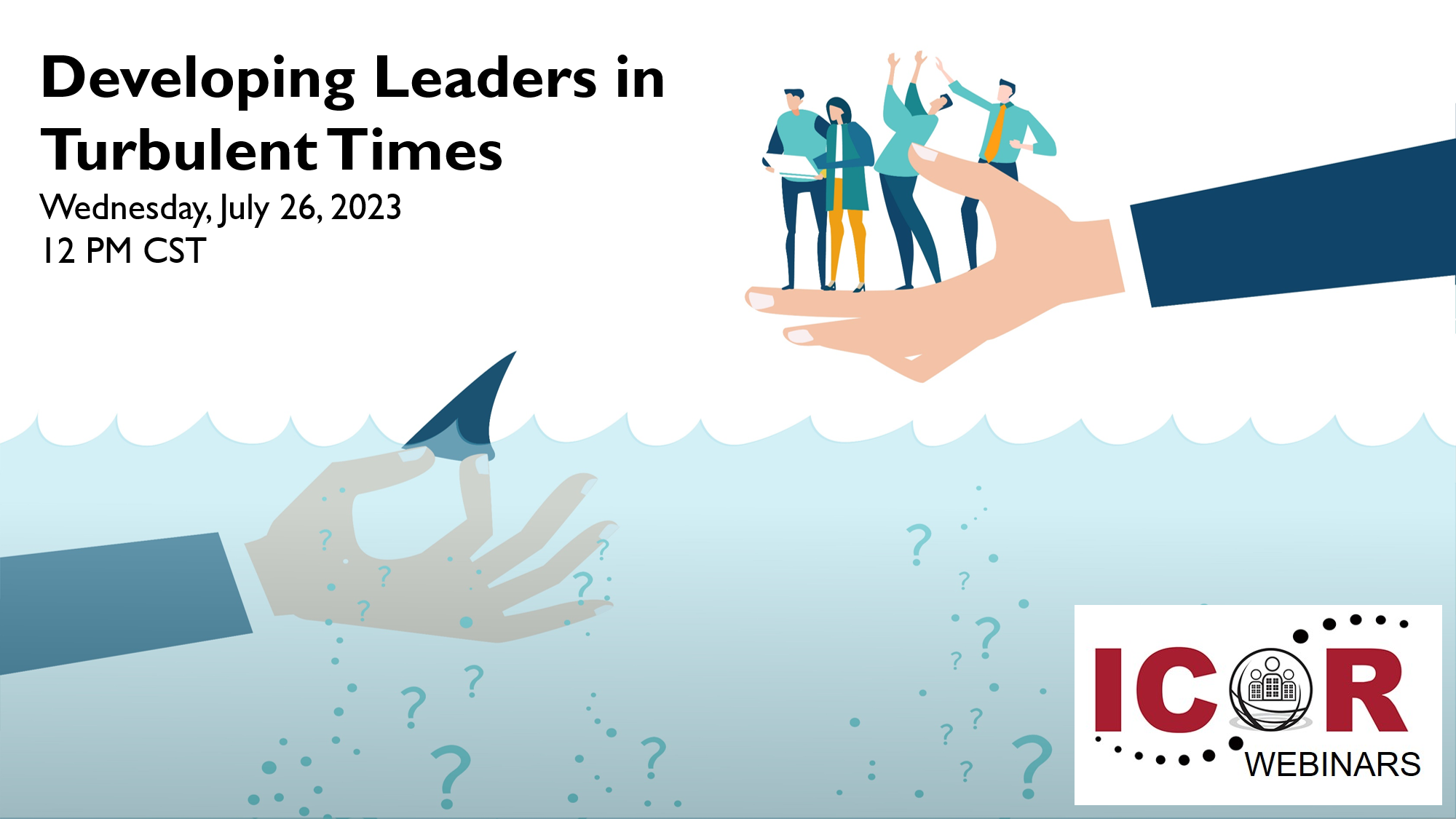
Leadership can make or break an organizationÕs future, especially in turbulent times. Few strategic challenges are more compelling than identifying, developing and properly positioning the leaders of tomorrow. Successful organizations embed leadership responsibility at all levels, and invest heavily in leadership development.
With the psychological and emotional role that leaders need to play if they are to optimize morale and productivity during turbulent times, it is more important than ever that organizations understand the four leadership behaviors that are critical during times of uncertainty and change.
Moving from Managing Risk to Strategic Resilience
June 21, 2023
Online
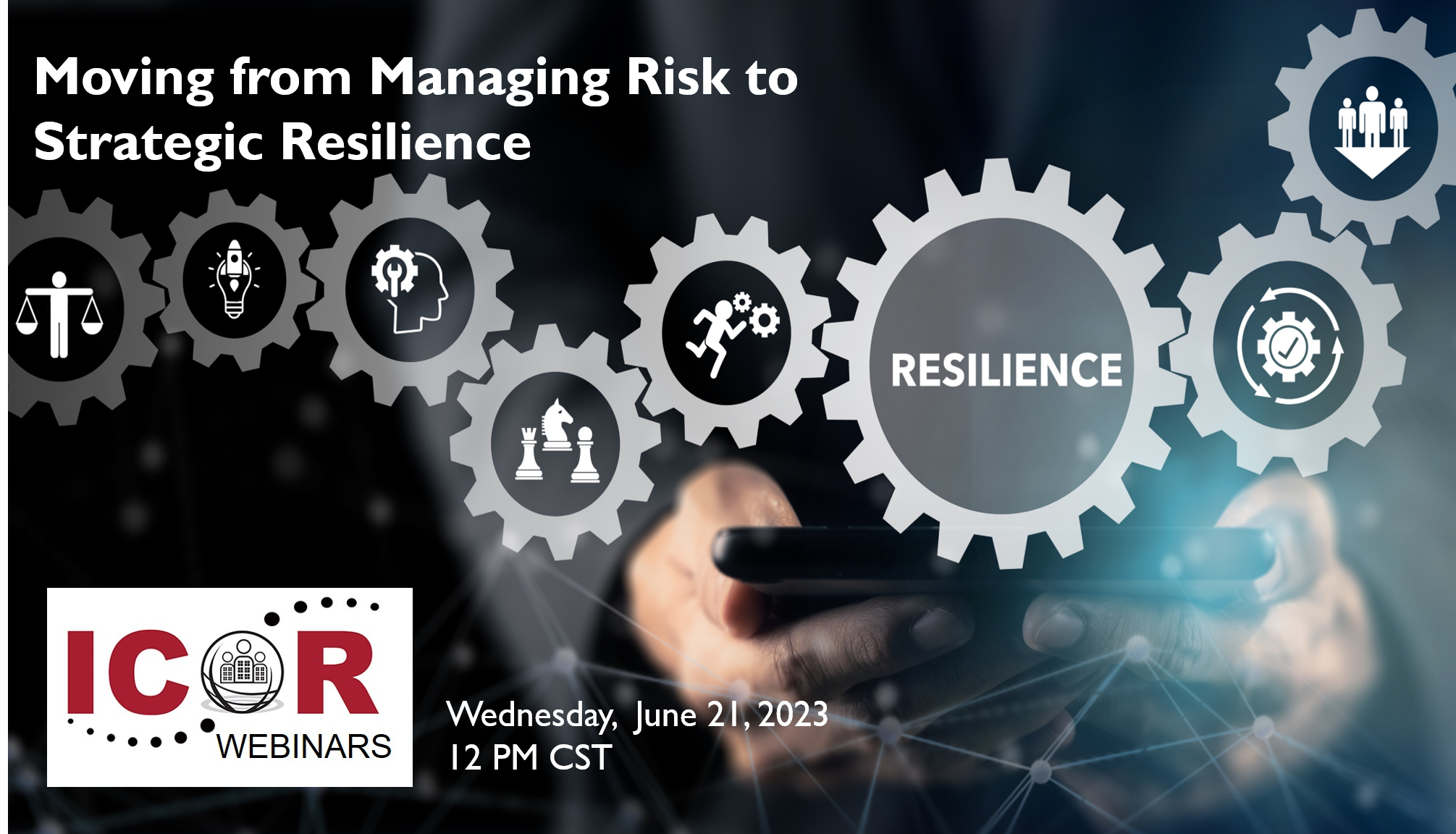
If itÕs taught us nothing else, the COVID-19 pandemic has provided the business case for leaders to move from defensive risk management to a forward-looking stance based on strategic resilience. The pandemic crisis has dramatically illustrated the short-sightedness of focusing on a small number of well-defined risks and the need to instead create a long-term strategy to successfully navigate in a world where there is a dynamic pace of change.
Attend this webinar and learn how to move to a broader mandate of integrating the risk function with other core functions to enable a more holistic resilience strategy.
The Role of Cross-Functional Teams in Building Resilience & Agility
May 24, 2023
Online
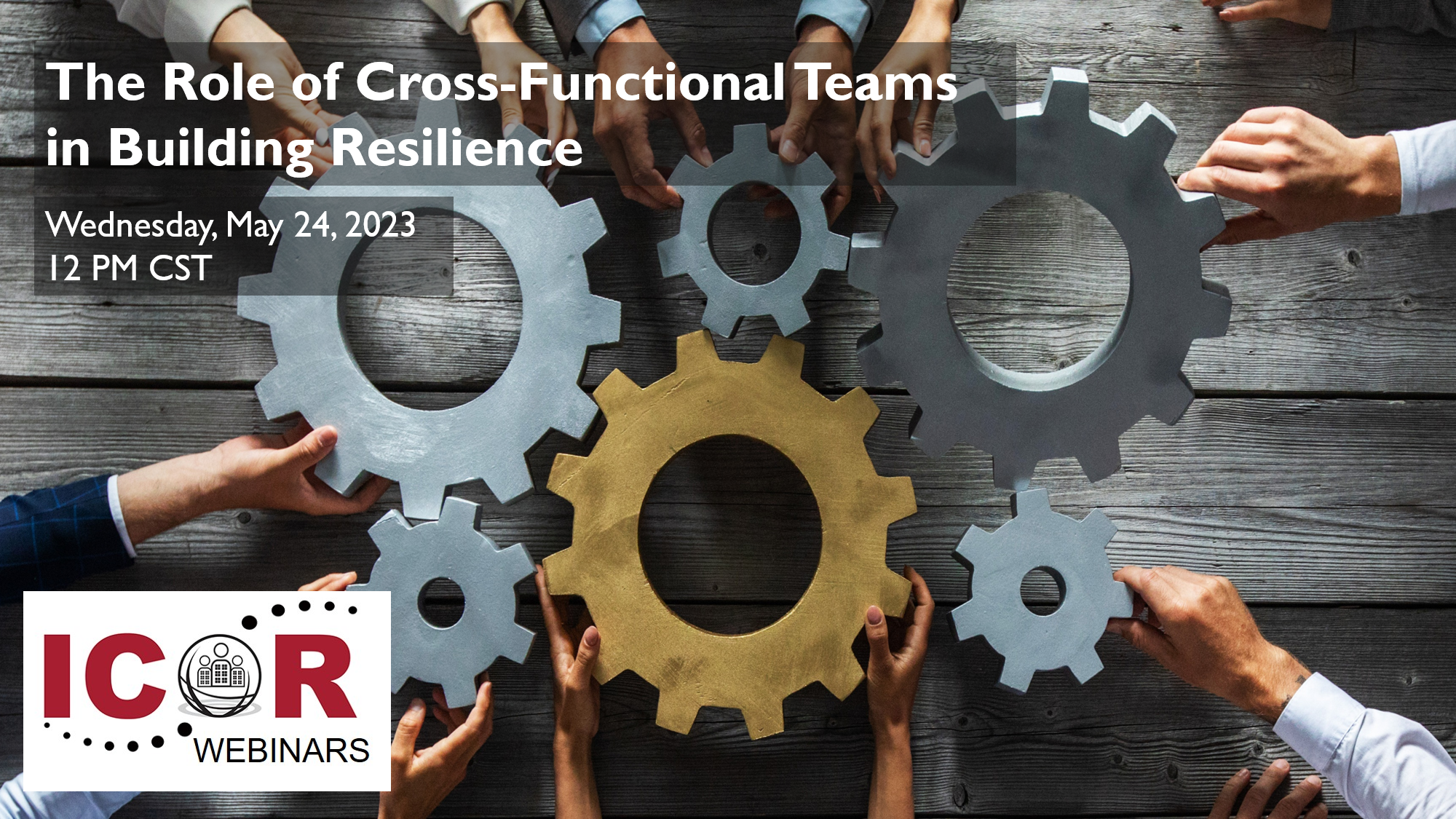
The coming together of minds from different teams and departments allows you to innovate, bring fresh perspectives, and strive towards shared goals. Relying on a single person or group of people to drive innovation excludes the input of different perspectives. Cross-functional collaboration drives progress across business units and departments.
Attend this webinar and learn how to use cross-functional teams to increase engagement, create a sense of purpose, and streamline work processes.
Managing Risk to the Data Center
April 19, 2023
Online
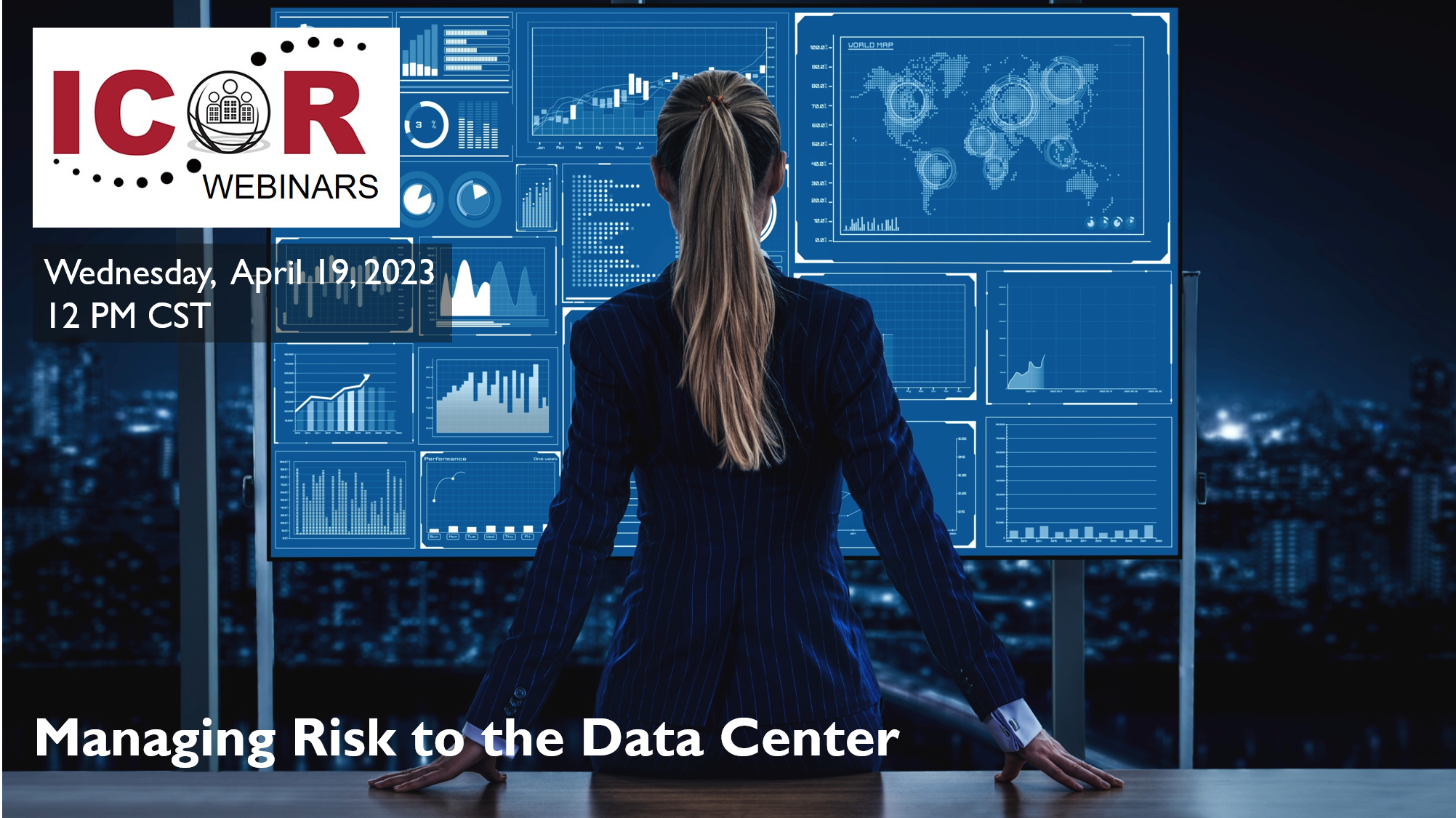
Traditional risk management is no longer an adequate activity to fully understand threats to critical environments such as data centers. With risks including increased demands to power land, and water, combined with supply chain disruptions, managing risk has become much more difficult. The increase in demand for ÒEverything as a ServiceÓ (XaaS) has also complicated this process.
Attend this webinar and learn more about the new risk environment in data centers and other critical environments.
Implementing a Unified Incident Response Structure
March 29, 2023
Online
An incident response capability can be applied to any function within an organization as well as when the incident requires shared response between organizations, between organizations and government, and between governments.
Attend this webinar and learn how to build an incident response capability that can be applied to any function and across multiple functions within an organization ensuring it operates as a single unified response system.